
Insurance claims, handled in Houston
Every insurer, every claim. In Texas the shop is your choice.
An insurance claim for collision repair is the process of getting your insurer, or the at-fault driver's insurer, to pay for fixing your car after a wreck in Houston. Texas law lets you choose the shop that does that work, no matter which insurance company ends up paying for it.
GTR Collision Houston works every claim the same way: a free written estimate first, then repairs once you and the insurer have signed off. Southwest Houston sees its share of wrecks along the Beltway 8 access roads and the Southwest Freeway, and most of what comes through the door starts with a phone call and a claim number.
Your rights in Texas
You choose the repair shop
Texas Insurance Code 1952.301 and 1952.302 bar an insurer from telling you which shop to use or limiting your coverage based on where you repair. That holds whether you are filing on your own policy or the at-fault driver's.
You get your own written estimate
The adjuster's estimate is a starting point, not the final word. Any shop you pick can write its own estimate and work out differences with the insurer directly.
Supplements are normal, not a red flag
Once a car is torn down, a shop often finds damage the adjuster's first look could not catch. That gets documented and sent to the insurer as a supplement before the added work starts.
At-fault claims and your own policy work differently
A claim against the at-fault driver's insurer usually comes with no deductible. Filing under your own collision coverage means paying your deductible, and your insurer can then pursue the other driver's insurer to recover it.
After the wreck, step by step
- 01
Document the scene
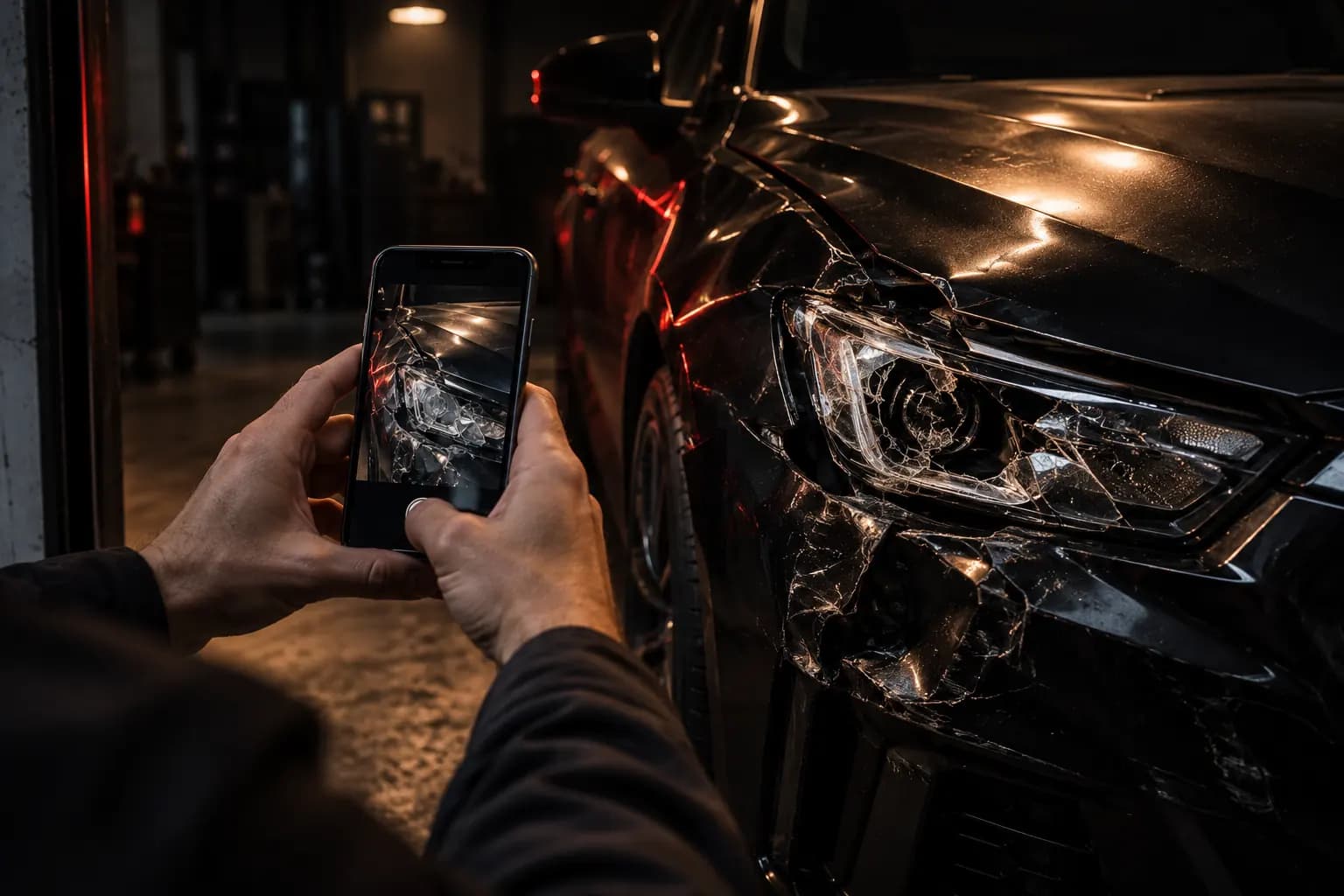
Photos of the damage, the other vehicle, and the scene help both insurers agree on what happened. Call the police for anything beyond a minor scrape.
- 02
Open the claim
Call your insurer, or the at-fault driver's if you are going that route, and get a claim number. Write it down along with the adjuster's name and number.
- 03
Choose your repair shop
Pick the shop before or after the adjuster's estimate. Texas law does not require you to use a shop your insurer suggests.
- 04
Get a shop estimate
Bring your claim number and the adjuster's estimate, and the shop writes its own. Differences between the two get worked out between the shop and the insurer.
- 05
Approve repairs and stay reachable
Once the estimate, and any supplement, is approved, repairs start. Keep your phone on. Supplements can come up mid-repair and need your insurer's sign-off before work continues.
What to bring
Bring these on your first visit and the estimate starts the same day you walk in.
Checklist
- Your claim number
- The adjuster's written estimate, if one exists
- A driver's license or photo ID
- Your insurance card
- Both sets of keys and any garage remotes
- Photos of the damage from your phone, if you took any
All insurance claims welcomed
After a wreck, your insurance company (or the at-fault driver's) sends an adjuster to look at the damage and write an estimate. In Texas, you get to pick the repair shop, nobody can force you into a specific one. Bring us your claim number and adjuster's estimate and we'll take it from there.
What to bring
- Bring your claim number and adjuster's estimate
- You choose the repair shop in Texas
- We give you our own written estimate
Insurance questions
No. Texas Insurance Code 1952.301 and 1952.302 stop an insurer from requiring a specific shop or limiting your coverage over where you repair. You can bring your claim to any shop you want, including one your insurer never mentioned.
A supplement is added cost found once the car is torn apart, for damage the first estimate could not see. The shop documents it and sends it to your insurer for approval before doing that work. It does not mean the first number was wrong.
A total loss means repair costs plus salvage value meet or exceed the car's value before the wreck, and Texas sets that threshold at 100 percent. The insurer pays out the car's cash value instead of paying for repairs. That call comes from the insurer, not the repair shop.
Only if your policy includes rental reimbursement coverage. Check your policy or ask your agent, since it does not come automatically with collision or liability coverage. When it applies, it usually carries a daily dollar limit and a maximum number of days.
Sometimes, if another driver was at fault and your car is worth less after the accident even with a good repair. Texas allows diminished value claims against the at-fault driver's insurer in many cases, though outcomes depend on the vehicle and the claim. Talk to your insurer or an attorney about your specific situation before assuming a number.
Not if you file against the at-fault driver's insurance directly, since liability claims typically do not carry a deductible. Filing under your own collision coverage means paying your deductible even when you were not at fault. Your insurer can then try to recover that deductible from the at-fault driver's insurer.
Start your estimate
Send a few photos of the damage and a quick description of what happened. Or just call us and we will walk you through it.